

York Thermostat Manual: A Comprehensive Guide

Navigating your YORK heating and cooling system starts here! This manual details operation‚ programming‚ troubleshooting‚ and compatibility for various YORK thermostat models.
York thermostats are central to efficient home comfort‚ controlling heating and cooling systems with precision. From basic non-programmable units like the S1-THEH21NY to advanced programmable models such as the HX3 and S1-THPU32P7S‚ York offers solutions for diverse needs. Understanding your thermostat’s features—including programmable schedules‚ humidity control (Model 2PP32U72124)‚ and potential remote access—is key.
This guide provides a comprehensive overview‚ assisting users in maximizing energy savings and maintaining a comfortable indoor environment.

Understanding York Thermostat Models
York offers a range of thermostat models‚ each designed with specific features. The HX3 provides programmable reminders for enhanced efficiency‚ while the S1-THPU32P7S is a high-resolution digital programmable thermostat. Some models‚ like 2PP32U72124‚ incorporate humidity control. Identifying your specific model is crucial for accessing the correct documentation and support.
Understanding the differences between these models allows users to optimize their HVAC system’s performance and comfort levels.
Popular York Thermostat Models (HX3‚ S1-THPU32P7S)
The York HX3 model stands out with its programmable reminder functionality‚ boosting convenience and energy savings. Conversely‚ the S1-THPU32P7S is a robust‚ 4-heat/2-cool programmable digital thermostat offering high resolution for clear display. Both are frequently used in residential settings.
These models represent York’s commitment to both user-friendly operation and advanced control capabilities within home climate management systems.
Identifying Your York Thermostat Model Number
Locating your York thermostat’s model number is crucial for accessing specific documentation and support. This number is typically found on the unit’s data plate‚ often a sticker affixed to the exterior or interior. Carefully inspect the thermostat casing for a label containing alphanumeric characters.
The model number uniquely identifies your thermostat‚ enabling you to find compatible parts and detailed instructions for operation and maintenance.
Locating the York Thermostat Serial Number
Finding your York thermostat’s serial number is essential for warranty claims and service inquiries. Like the model number‚ the serial number resides on the data plate. This plate is usually a sticker located on the thermostat’s exterior or interior surfaces.
The serial number is a unique identifier for your specific unit‚ providing valuable information about its manufacturing date and history. Keep this number readily available for future reference.
York Thermostat Basic Operation
York thermostats offer intuitive control over your home’s climate. Initial setup typically involves powering on the device and selecting your preferred temperature units. Adjusting the temperature is straightforward using the up and down arrows‚ or the digital keypad‚ depending on your model.
Ensure the system is set to “Heat” for warming and “Cool” for cooling. Familiarize yourself with the display to understand current settings and operational status.
Powering On and Initial Setup
York thermostats generally power on automatically upon installation‚ or with battery insertion. The initial setup often prompts you to confirm the date and time. Some models‚ like the HX3‚ may guide you through a system check. Ensure your HVAC system’s power is also on.
Verify correct wiring before proceeding. If issues arise‚ consult the wiring diagrams or a professional. Proper setup ensures accurate temperature readings and efficient operation.
Temperature Control and Adjustment
York thermostats offer intuitive temperature control. Use the up and down arrows‚ or the touchscreen interface‚ to set your desired heating or cooling temperature. Many models display both the setpoint and the current room temperature. Observe a slight delay before the system responds to adjustments.
For precise control‚ consider utilizing programmable schedules. Ensure the thermostat is in the correct mode – Heat‚ Cool‚ or Auto – for optimal performance and comfort.
Programming Your York Thermostat
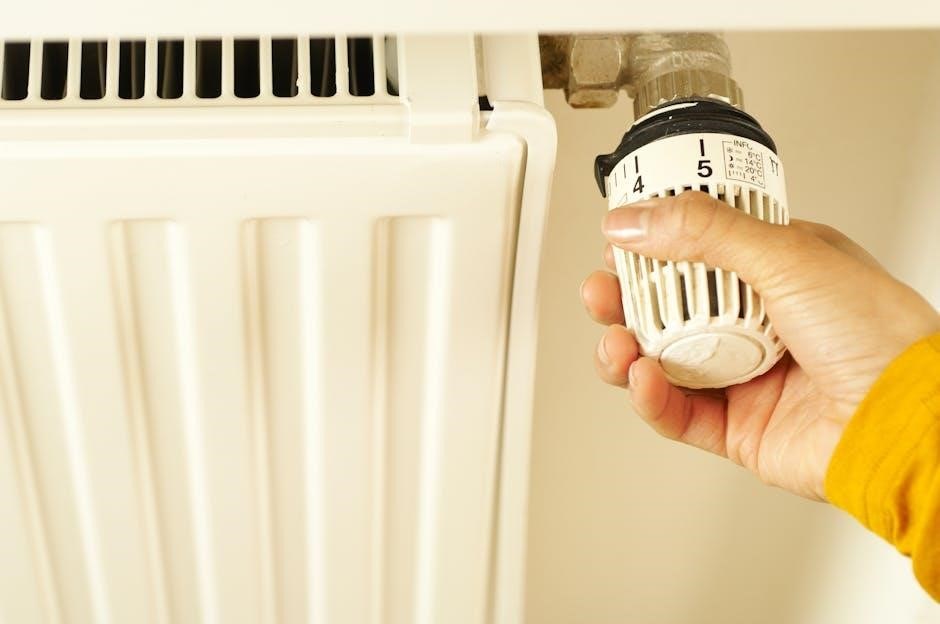
York thermostats‚ particularly the HX3 model‚ allow customized scheduling for energy savings and comfort. Access the programming mode through the menu‚ typically indicated by a clock or schedule icon. Define different temperature settings for various times of day and days of the week.
Utilize the programmable reminders feature on the HX3 for maintenance alerts. Carefully review your schedule to ensure it aligns with your lifestyle and preferences for optimal efficiency.
Setting Schedules for Heating and Cooling
York thermostats empower users to create personalized heating and cooling schedules. Begin by accessing the programming menu‚ often symbolized by a clock icon. Define distinct periods – wake‚ leave‚ return‚ and sleep – assigning desired temperatures to each. Consider weekday/weekend differentiation for varied routines.
Programming allows automatic temperature adjustments‚ maximizing comfort and minimizing energy consumption. Regularly review and adjust schedules to reflect seasonal changes or lifestyle modifications for optimal performance.
Using Programmable Reminders (HX3 Model)
The YORK HX3 model boasts a convenient programmable reminder feature‚ enhancing efficiency and maintenance awareness. Access the reminder settings through the thermostat’s menu. Users can set reminders for crucial tasks like filter changes or HVAC system inspections.
These timely alerts ensure proactive system upkeep‚ preventing potential issues and prolonging equipment lifespan. Customize reminder frequency and notification preferences for a tailored experience‚ optimizing system performance and reducing long-term costs.
York Thermostat Display and Icons
Understanding your YORK thermostat’s display is key to effective operation. The screen presents current temperature‚ setpoint‚ mode (heat‚ cool‚ auto)‚ and fan settings. Various icons indicate system status – a flame signifies heating‚ a snowflake represents cooling‚ and a fan icon shows fan operation.
Decoding these symbols‚ alongside potential error codes‚ allows for quick identification of issues. Familiarize yourself with the display’s layout to efficiently monitor and adjust your home’s climate control system for optimal comfort.
Decoding Common Display Symbols
YORK thermostat displays utilize specific symbols for quick status updates. A flame icon indicates the heating system is actively running‚ while a snowflake signifies cooling mode engagement. A fan symbol denotes fan operation‚ independent of heating or cooling. “Auto” mode switches between heating and cooling as needed.
Other symbols may represent humidity control‚ filter change reminders‚ or system errors. Refer to your specific model’s documentation for a complete symbol glossary‚ ensuring accurate interpretation of your thermostat’s current state.
Understanding Error Codes
YORK thermostats display error codes to signal system malfunctions. These codes‚ often numerical or alphanumeric‚ pinpoint the source of the problem‚ aiding in troubleshooting. Common codes relate to sensor failures‚ wiring issues‚ or HVAC system incompatibilities. Consult your thermostat’s manual for a comprehensive list and corresponding solutions.
Ignoring error codes can lead to system damage or inefficient operation. If an error persists after attempting basic fixes‚ contacting a qualified HVAC technician is recommended for professional diagnosis and repair.
Troubleshooting Common York Thermostat Issues
Encountering problems with your YORK thermostat? Common issues include a unit failing to power on – check batteries or the breaker. Inaccurate temperature readings may indicate sensor malfunction or improper placement. Connectivity problems‚ if applicable‚ often require resetting the device or verifying Wi-Fi access.
Before calling a technician‚ attempt a reset. If issues persist‚ consult the error code section or the full manual for detailed troubleshooting steps specific to your model.
Thermostat Not Turning On

If your YORK thermostat isn’t powering up‚ begin with the simplest checks. First‚ verify the batteries are fresh and correctly installed‚ if applicable. Next‚ inspect the circuit breaker controlling the HVAC system; a tripped breaker will prevent operation. Ensure the thermostat is securely mounted to the wall plate‚ establishing a proper electrical connection.
If these steps fail‚ consult the wiring diagram to confirm connections are secure. A professional may be needed for complex electrical issues.
Inaccurate Temperature Readings

Experiencing temperature discrepancies with your YORK thermostat? First‚ ensure the thermostat isn’t directly exposed to sunlight‚ drafts‚ or heat-generating appliances. These factors can skew readings. Verify proper airflow around the unit; obstructions hinder accurate sensing. Calibrate the thermostat if your model allows‚ comparing its reading to a trusted thermometer.
If issues persist‚ a faulty temperature sensor might require professional replacement for reliable climate control.
Connectivity Problems (if applicable)
Encountering issues connecting your smart YORK thermostat to Wi-Fi? Confirm your home network is functioning correctly and the password entered is accurate. Ensure the thermostat is within range of your router; signal strength impacts connectivity. Restart both the thermostat and your router to refresh the connection.
Check for firmware updates via the YORK app‚ as these often address connectivity bugs. If problems continue‚ consult YORK’s support resources.
York Thermostat Humidity Control
Certain YORK thermostat models‚ like the 2PP32U72124‚ offer integrated humidity control. This feature allows you to manage indoor moisture levels alongside temperature. Adjusting humidity settings can enhance comfort and prevent issues like condensation or dry air. Explore the thermostat’s menu to access humidity control options‚ typically expressed as a percentage.
Lower settings reduce humidity‚ while higher settings increase it. Proper humidity balance improves overall indoor air quality.
Thermostats with Humidity Control (Model 2PP32U72124)
The YORK Model 2PP32U72124 thermostat distinguishes itself with built-in humidity control capabilities. This allows precise management of indoor moisture‚ complementing temperature adjustments for optimal comfort. Users can set desired humidity levels‚ typically as a percentage‚ through the thermostat’s interface. This feature is beneficial in preventing both excessively dry conditions and unwanted condensation.
Maintaining ideal humidity contributes to a healthier and more comfortable living environment.
Adjusting Humidity Settings
To adjust humidity on a YORK thermostat with this feature‚ access the humidity control menu – often indicated by a droplet icon. Use the up and down arrows to select your preferred humidity percentage. Lower percentages reduce moisture‚ ideal for preventing mold‚ while higher percentages add moisture for comfort.
Monitor indoor humidity levels with a separate hygrometer for accurate adjustments; Remember‚ optimal humidity typically falls between 30-50% for a healthy indoor climate.
York Thermostat and HVAC System Compatibility
Understanding your HVAC system’s wiring configuration is crucial for YORK thermostat compatibility. Most YORK thermostats utilize a 2H/1C system – two heating stages and one cooling stage. However‚ some systems may require different configurations.
Verify your existing wiring before installation. Incorrect wiring can damage both the thermostat and your HVAC equipment. Consult a professional if unsure about your system’s specific requirements for a seamless integration.
2H/1C vs. Other System Configurations
The standard 2H/1C configuration signifies two heating stages and a single cooling stage‚ common in many YORK systems. However‚ some setups employ 3H/2C (three heating‚ two cooling) or even single-stage systems.
Incorrectly matching a thermostat to your system can lead to inefficient operation or complete failure. Always confirm your HVAC’s wiring and stage requirements before installation. Professional assistance is recommended for non-standard configurations to ensure proper functionality.
York Thermostat Data Plate Information
Locating the data plate is crucial for identifying your YORK thermostat’s model and serial number. This sticker‚ typically found on the unit’s exterior or interior‚ holds vital details.
Decoding the data plate reveals the model number‚ manufacturing date‚ and importantly‚ the ‘digit 12’ indicating the model’s vintage or year of production. This information is essential for finding compatible replacement parts and accessing specific documentation.
Interpreting Data Plate Details
The data plate’s model number precisely identifies your YORK thermostat‚ enabling accurate parts sourcing and support. The serial number is unique to your unit‚ useful for warranty claims and service history.
Pay close attention to ‘digit 12’ – this signifies the model’s manufacturing year‚ revealing its age. Understanding these details assists in determining compatibility with modern HVAC systems and finding relevant troubleshooting guides. Accurate interpretation ensures effective thermostat management.
Understanding Model Vintage (Digit 12)
Digit 12 on the data plate reveals the YORK thermostat’s manufacturing year‚ crucial for compatibility assessments. This digit indicates the model’s vintage‚ impacting available features and potential replacement options. Older models may lack modern functionalities like Wi-Fi connectivity.
Knowing the year of manufacture aids in locating appropriate documentation and troubleshooting resources. It also helps determine if a thermostat upgrade is advisable for enhanced energy efficiency and smart home integration. Understanding this detail is key to informed maintenance.
York Thermostat Replacement
Replacing your YORK thermostat requires careful consideration. First‚ identify a compatible replacement‚ ensuring it supports your HVAC system’s wiring configuration – typically 2H/1C. DIY replacement is possible for those comfortable with electrical work‚ but safety is paramount; always disconnect power first.
Alternatively‚ professional installation guarantees correct wiring and system functionality. Incorrect installation can damage your HVAC equipment. Consider the benefits of a modern‚ programmable thermostat for improved energy savings and convenience during the replacement process.
Finding a Compatible Replacement Thermostat
Securing a compatible YORK thermostat replacement begins with identifying your existing system’s wiring – commonly 2H/1C. Online retailers and HVAC suppliers offer a range of options‚ including the YORK S1-THPU32P7S and models with humidity control like 2PP32U72124.
Verify the new thermostat supports your system’s voltage and features. Consider upgrading to a programmable or smart thermostat for enhanced control and energy efficiency. Always cross-reference the model number and wiring diagram before purchasing to ensure a seamless fit.
DIY Replacement vs. Professional Installation
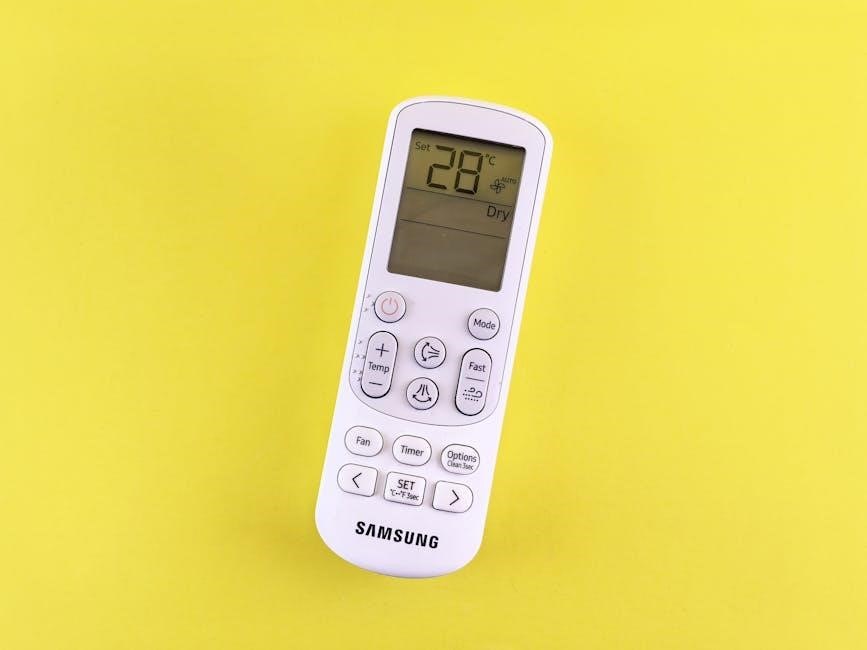
Replacing a YORK thermostat can be a DIY project for those comfortable with basic wiring‚ especially with straightforward 2H/1C systems. However‚ incorrect wiring can damage your HVAC equipment. Professional installation ensures proper connection‚ configuration‚ and system compatibility.
If you’re unsure about wiring diagrams or voltage requirements‚ or if your system is complex‚ a qualified HVAC technician is recommended. They can also verify the new thermostat is functioning optimally‚ maximizing efficiency and preventing future issues.
York Thermostat Wiring Diagrams
Understanding your YORK thermostat’s wiring is crucial for installation or replacement. Common configurations involve identifying terminals for heating (H)‚ cooling (C)‚ common (C)‚ and fan (F). Always disconnect power before working with wiring! Refer to your specific model’s wiring diagram – often found on the inside of the thermostat cover or online.
Incorrect wiring can cause system malfunction or damage. Prioritize safety; if unsure‚ consult a qualified HVAC technician. Double-check connections before restoring power to ensure proper operation.
Common Wiring Configurations
Typical YORK thermostat wiring utilizes a 2H/1C system – two heating stages and one cooling stage. The ‘R’ terminal is for 24V power‚ ‘W’ for heat‚ ‘Y’ for cool‚ and ‘G’ for the fan. ‘C’ is the common wire‚ essential for power. Some systems may include ‘Aux’ for auxiliary heat or ‘E’ for emergency heat.
Variations exist; always verify your specific HVAC system’s wiring. Incorrect connections can lead to operational issues. Consult a wiring diagram for accurate identification before proceeding with any installation or repair work.
Safety Precautions When Wiring
Always disconnect power to your HVAC system at the breaker box before handling any wiring. Failure to do so presents a serious electrocution hazard. Use insulated tools to prevent accidental shorts. Double-check all connections before restoring power‚ ensuring wires are securely fastened to their respective terminals.
If unsure about any aspect of the wiring process‚ consult a qualified HVAC technician. Improper wiring can damage your system and create a fire risk. Never work with wet hands or in damp conditions.
York Thermostat Advanced Features
Certain YORK thermostat models offer remote access and control via smartphone apps‚ allowing adjustments from anywhere. Energy saving modes‚ like pre-programmed schedules and geofencing‚ optimize efficiency and reduce utility bills. These features learn your habits and automatically adjust temperatures for maximum comfort and savings.
Explore the specific capabilities of your model; some include detailed energy usage reports and customizable comfort profiles. Remote access requires a stable internet connection and account setup.
Remote Access and Control (if applicable)
If your YORK thermostat supports it‚ remote access allows control via a smartphone app. This requires a stable internet connection and a registered account with YORK’s connected home platform. Through the app‚ you can adjust temperatures‚ set schedules‚ and monitor energy usage from anywhere.
Ensure your thermostat is properly connected to your Wi-Fi network during initial setup. Download the appropriate app from your device’s app store and follow the on-screen instructions for pairing.
Energy Saving Modes
YORK thermostats often feature energy-saving modes designed to reduce consumption. These modes automatically adjust temperatures based on pre-set schedules or occupancy detection. Utilizing these features can significantly lower utility bills without sacrificing comfort. Explore options like ‘Away’ mode‚ which sets back temperatures when the home is unoccupied.
Some models include ‘Eco’ modes‚ optimizing for maximum efficiency. Review your thermostat’s settings to discover and activate these valuable energy-saving functionalities.
York Thermostat Maintenance
Regular maintenance ensures optimal YORK thermostat performance and longevity. Periodically clean the thermostat’s exterior with a soft‚ dry cloth to remove dust and debris. Avoid using liquids or abrasive cleaners. Battery replacement is crucial for thermostats requiring them; check the display for low battery warnings.

Inspect wiring connections annually‚ ensuring they are secure. Proper care extends the life of your thermostat and maintains accurate temperature control.

Cleaning the Thermostat
Maintaining a clean YORK thermostat is simple yet vital for accurate operation. Begin by turning off power to the HVAC system at the breaker. Gently remove the thermostat cover‚ if removable‚ following the manual’s instructions. Use a soft‚ dry cloth to wipe down the exterior casing‚ removing dust and smudges.
Avoid using water‚ solvents‚ or abrasive cleaners‚ as these can damage the sensitive components. Reattach the cover and restore power.
Battery Replacement
If your YORK thermostat utilizes batteries‚ regular replacement ensures continued functionality. Low battery indicators on the display signal the need for new ones. Consult your specific model’s manual for the correct battery type – typically AA or AAA. Turn off the HVAC system before proceeding.
Carefully remove the old batteries and install fresh ones‚ observing the correct polarity. Verify proper operation after replacement.
York Packaged Rooftop Unit Digit Codes
York packaged rooftop unit model numbers contain digit codes revealing crucial information. The product family code‚ often ‘JR’‚ identifies the unit type. Specifically‚ digit 12 indicates the model’s vintage or year of manufacture. Decoding these digits assists in parts identification and compatibility assessments.
Understanding these codes streamlines maintenance and repair processes‚ ensuring accurate service for your rooftop HVAC system. Refer to York’s documentation for a complete digit code breakdown.
Understanding Product Family Codes (JR)
The product family code‚ prominently ‘JR’ within York packaged rooftop unit model numbers‚ signifies a specific range of equipment. This ‘JR’ designation generally denotes York’s standard rooftop units‚ encompassing various capacities and configurations. Identifying this code is the first step in deciphering the complete model number.
Further digits following ‘JR’ detail specific features‚ size‚ and performance characteristics. Knowing the product family aids in locating appropriate documentation and replacement parts for efficient maintenance.

York Thermostat Voltage and Heat Gain Calculation
Understanding voltage variations is crucial for DMS series York units. Models like DMS-360 to DMS-600 operate at 220V/3Ph/60Hz‚ with noted voltage variations impacting performance. Accurate heat gain calculations are essential for proper system sizing and efficiency.
These calculations determine the cooling or heating load required for a space‚ ensuring the thermostat effectively manages temperature. Consult detailed engineering resources for precise heat gain assessment methods.
Voltage Variation Information (DMS Series)
The DMS series York units exhibit specific voltage characteristics. DMS-360 operates at 180/253 volts‚ while DMS-420‚ DMS-480‚ and DMS-600 all function at 220V/3Ph/60Hz. Maintaining consistent voltage within these ranges is vital for optimal thermostat and system performance.
Significant deviations can lead to reduced efficiency‚ component damage‚ or inaccurate temperature control. Regular voltage checks are recommended to ensure stable operation.
Heat Gain Calculation Basics
Calculating heat gain is crucial for properly sizing your HVAC system and ensuring efficient thermostat operation. Heat gain considers factors like sunlight‚ occupants‚ appliances‚ and building materials. Accurate calculations determine the cooling load‚ influencing thermostat settings and system runtime.
Understanding these basics helps optimize comfort and energy savings. Professional HVAC technicians utilize specialized software for precise assessments‚ but basic estimations are possible for homeowners.